Improving digestion doesn’t mean completely overhauled meal plans or restrictive detoxes. Often, the most effective way to support gut health and keep things moving smoothly is simply weaving gut-supportive ingredients—like soluble fiber, fermented foods, and healthy fats—into meals you already eat every day.
Here are seven simple, highly actionable ways to upgrade everyday dishes for better digestion.
1. Blend Fiber and Enzymes into Smoothies
Smoothies are already a convenient meal, but they can easily become a digestion power-house with a few key additions.
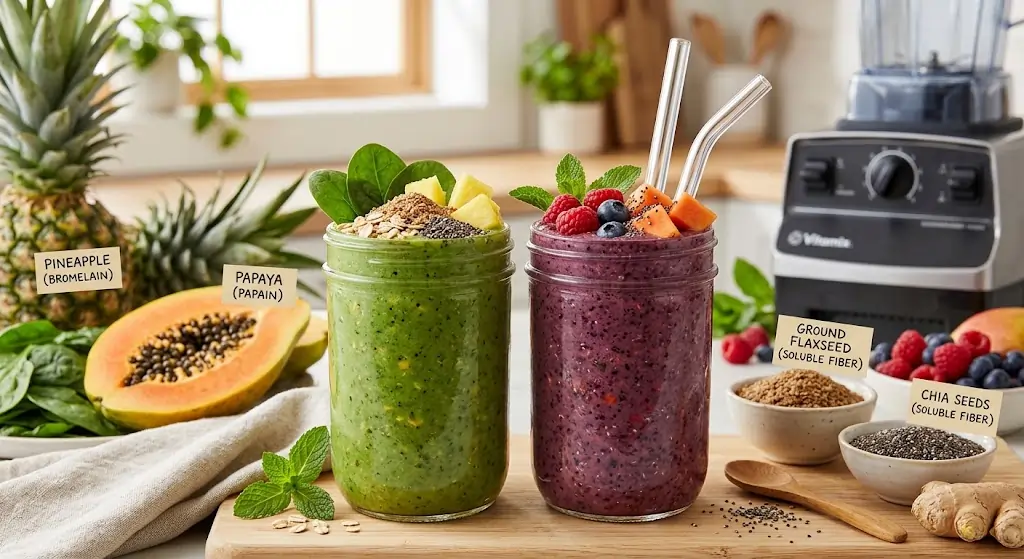
- Add Digestive Enzymes: Ingredients like fresh pineapple (containing bromelain) and papaya (containing papain) naturally help break down dietary proteins, easing the burden on your stomach.
- Boost Soluble Fiber: Blend in a tablespoon of chia seeds, ground flaxseeds, or acacia fiber. Soluble fiber absorbs water to form a gel-like substance, helping slow digestion for steady blood sugar while feeding beneficial gut bacteria.
- Use Fermented Bases: Swap water or almond milk for plain kefir or yogurt to introduce live probiotics straight into your morning blend.
2. Upgrade Your Baking Batters
Traditional baking batters made solely with refined white flour can leave you feeling sluggish. Refining removes the bran and germ, stripping away essential dietary fiber.
- Fold in Fiber Boosters: Mix 2–3 tablespoons of ground flaxseed, chia meal, or psyllium husk directly into pancake, waffle, or muffin batters.
- Use Fermented Starters: Incorporate a sourdough discard into pancake or crepes batters. The fermentation process pre-digests starches and neutralizes phytic acid, making nutrients easier to absorb and far gentler on the stomach.
3. Use Fiber-Rich “Flax Eggs” as a Swap for Eggs
Whether you’re baking vegan or simply looking to add more plant-based fiber to your diet, replacing eggs with a flax or chia gel in baked goods is one of the easiest gut-health upgrades.
How to make a flax egg:
Combine 1 tablespoon of finely ground flaxseed with 3 tablespoons of water. Let it sit for 5–10 minutes until it forms a thick, gel-like consistency. Use it as a 1:1 replacement for eggs in muffins, quick breads, and cookies.
Flaxseeds provide mucilage—a viscous soluble fiber that coats and soothes the digestive tract while promoting regular bowel movements.
4. Build Balanced Breakfast Bowls
Moving away from processed cereal in favor of whole-grain or probiotic breakfast bowls provides the sustained energy and fiber your digestive tract thrives on.
| Bowl Base | Gut Health Benefit | Ideal Pairings |
|---|---|---|
| Warm Oatmeal / Steel-Cut Oats | Rich in beta-glucan, a soluble fiber that fuels healthy gut microbes. | Stewed apples (rich in pectin), cinnamon, almond butter. |
| Greek Yogurt or Kefir | Delivers live probiotic strains to support microbiome diversity. | Fresh berries, hemp seeds, a drizzle of raw honey. |
| Chia Seed Pudding | High fiber content promotes healthy, regular transit time. | Sliced banana, toasted coconut flakes, crushed walnuts. |
5. Infuse Gut-Soothing Ingredients into Savory Recipes
Dinner is a prime opportunity to incorporate carminative herbs—herbs and spices that naturally calm the digestive system and reduce bloating or gas.
- Spice Wise: Cook with ginger, turmeric, fennel seeds, and cumin. Ginger stimulates gastric emptying (moving food from the stomach to the small intestine faster), while fennel seeds help relax intestinal smooth muscle.
- Deglaze with Bone Broth: Use collagen-rich bone broth as the base for soups, grains, and sauces. Collagen contains amino acids like glutamine, which helps support and preserve the integrity of the intestinal lining.
- Fermented Condiments: Serve savory grain bowls or roasted vegetables with a side of unpasteurized sauerkraut, kimchi, or a spoonful of miso sauce to add live cultures to dinner.
6. Sprinkle on Crunchy Toppings
Texture makes meals more satisfying, but choosing the right crunchy toppings also pumps up the fiber count of soups, salads, and roasted veggies.
- Toasted Pumpkin & Sunflower Seeds: Packed with zinc and magnesium, which play a structural role in digestive enzyme function and muscle contraction along the GI tract.
- Raw or Roasted Nuts: Almonds, walnuts, and pecans supply healthy monounsaturated fats that stimulate the gallbladder to release bile, assisting in fat digestion.
- Roasted Chickpeas: Swap croutons for crunchy roasted chickpeas to gain an extra 4–5 grams of fiber per serving.
7. Roll Up High-Fiber Energy Bites
When mid-afternoon hunger hits, low-fiber snacks can cause blood sugar spikes and slow down sluggish digestion. High-fiber energy bites offer a quick, convenient alternative.
Combine rolled oats, nut butter, ground flaxseed, chia seeds, and chopped dark chocolate or dried fruit. Roll into bite-sized balls and store them in the fridge for a quick snack that packs 3–4 grams of gut-friendly fiber per bite.