Nutrition Facts
Servings: 4 ServingCalories:320kcalTotal Fat:14gCholesterol:85mgSodium:780mgPotassium:420mgTotal Carbohydrate:9gDietary Fiber: 3gSugars: 2gProtein:36gCalcium: 45mg


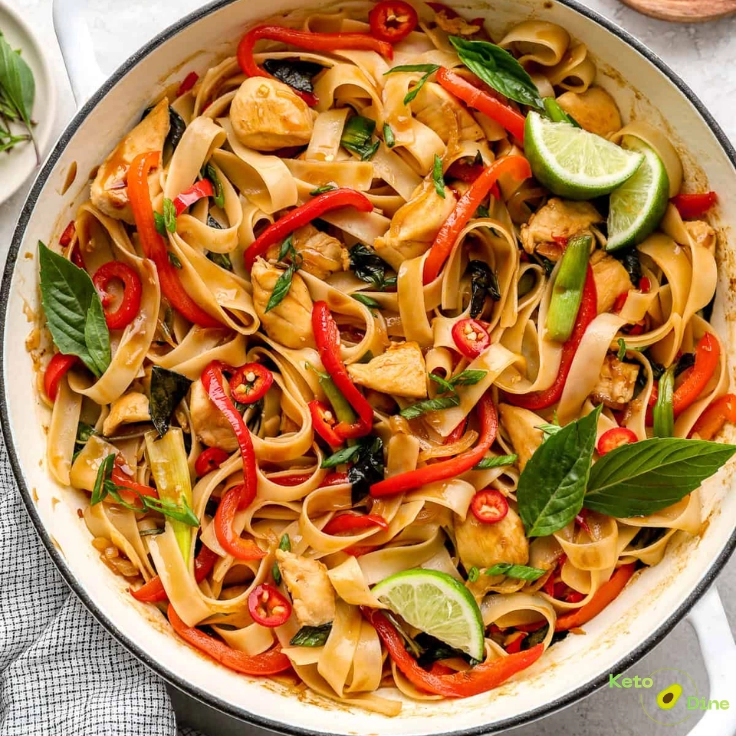
This delicious recipe brings bold, savory flavor straight to your skillet. First, tender chicken breasts sizzle alongside crisp red bell peppers and fresh Thai basil. Meanwhile, low-carb fettuccine noodles absorb a rich, garlic-chili soy sauce. Therefore, every single bite offers a punch of sweet, savory, and spicy notes. As a result, you get an authentic take-out experience with minimal net carbs.
Additionally, this low-carb twist delivers massive flavor without compromising your goals. First, fresh holy basil lifts the entire skillet with anise-like aromas. Furthermore, juicy chicken breast slices provide a massive protein boost. Finally, zero-carb noodles make this classic meal completely guilt-free.
Yes, this modified version fits your low-carb routine seamlessly. Traditional rice noodles pack massive amounts of carbs into a single bowl. Instead, we use low-carb konjac or heart-of-palm fettuccine noodles. Consequently, this swap drops the net carbs down to just 6 grams per serving. Therefore, you can comfortably enjoy this savory dish without leaving ketosis.
I cook this dish whenever late-night take-out cravings strike hard. Truly, the fragrant aroma of garlic, chili, and basil fills my whole kitchen. Furthermore, the quick stir-fry method saves me valuable time after busy workdays. Additionally, the high protein content leaves me feeling completely satisfied for hours. As a result, it remains my top choice for effortless meal prep.
I’ve included everything below to make this recipe easy to follow at home. For the full printable recipe instructions and ingredient quantities, scroll to the Recipe card at the bottom of this post.
I love using konjac or heart-of-palm fettuccine for this stir-fry. These noodles offer a satisfying chew while carrying the rich, savory sauce. Moreover, they keep total carbs extremely low for keto success.
Boneless, skinless chicken breast keeps this meal lean and high in protein. First, slice it thinly so it cooks rapidly over high heat. Consequently, the meat remains tender, juicy, and perfectly seasoned.
Fresh bell pepper strips add bright color and natural crunch to the pan. Additionally, they provide subtle sweetness that balances the chili heat seamlessly.
Fresh Thai basil is the true star of authentic Pad Kee Mao. Indeed, its unique peppery flavor lifts the entire savory dish. However, standard Italian sweet basil works nicely if needed.
Gluten-free tamari provides that classic deep, savory umami base. Furthermore, it acts as a sugar-free substitute for standard soy sauce. As a result, your stir-fry gains authentic depth.
Sliced chilies provide the signature heat that defines drunken noodles. Instead, remove the seeds if you prefer a much milder spice level.
I’ve included everything below to make this recipe easy to follow at home. For the full printable recipe instructions and ingredient quantities, scroll to the Recipe card at the bottom of this post.
Pro Tip: Dry your low-carb noodles thoroughly with paper towels before cooking. This crucial step prevents extra water from diluting your stir-fry sauce.
Store leftover stir-fry in an airtight container within your refrigerator for up to 4 days. Furthermore, avoid freezing this dish because konjac noodle textures degrade when thawed. To reheat, warm your portion in a hot skillet for 2 minutes over medium heat. Alternatively, microwave on high for 90 seconds until hot throughout.
Enjoy a keto-friendly take on classic Thai Pad Kee Mao. This easy stir-fry features tender chicken breast, low-carb fettuccine noodles, and crisp peppers tossed in a mouthwatering garlic-chili sauce. Finished with fresh Thai basil, it delivers quick, satisfying takeout flavor in 20 minutes.
Servings: 4 ServingCalories:320kcalTotal Fat:14gCholesterol:85mgSodium:780mgPotassium:420mgTotal Carbohydrate:9gDietary Fiber: 3gSugars: 2gProtein:36gCalcium: 45mg
Store leftovers in airtight glass containers inside the fridge for 4 days max. Meanwhile, reheat in a hot skillet over medium heat for best texture. Note that soy sauce can be used if tamari is unavailable, but tamari keeps this recipe completely gluten-free. Additionally, squeeze fresh lime juice right before eating to boost overall dish brightness.